
Skip garage door prep this fall and the bill usually comes due on the coldest morning of the year — a spring that snaps when steel contracts, an opener straining against a door frozen to the floor, or a seal so cracked that snowmelt and road salt soak into the bottom panel all winter long. None of that is cheap to fix once it happens, and almost all of it is avoidable with an hour of work now, before the first hard freeze locks everything in place.
Why winter is harder on a garage door than any other season
Steel springs lose tension as temperatures drop, which means a door that was balanced in September can feel noticeably heavier in January — or stop lifting evenly at all. Standard grease-based lubricant thickens in the cold and stops doing its job right when you need it most. Weatherstripping that was flexible all summer turns brittle and starts cracking in deep cold, letting in wind-driven snow. And every time plows and road crews lay down salt, that brine gets tracked into the garage on tires and boots, where it sits against metal tracks, hinges, and the bottom of the door.
Check the weatherstripping and bottom seal
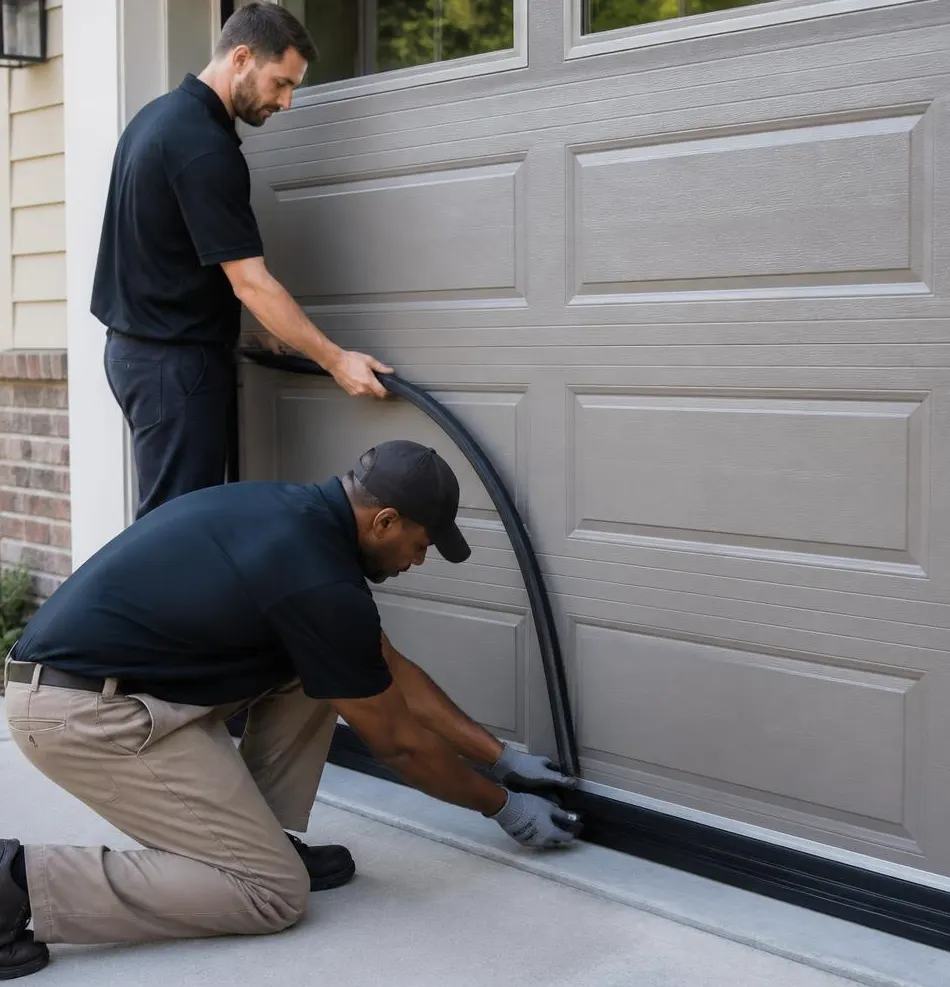
Walk around the door while it's closed and look for daylight, gaps, or seal material that's gone stiff or torn. A compromised seal does two things in a Michigan winter: it lets cold air and snow blow into the garage, and it leaves the slab floor exposed to slush that refreezes into ice sheets by morning. Replacing the bottom astragal seal is inexpensive and takes less than an hour — do it before the first snow, not after you've already shoveled around a frozen door three times.
What to look for
- Cracks or hardening along the bottom rubber seal
- Gaps at the corners where the seal has pulled away from the door
- Light visible around the perimeter when the door is fully closed
- Side weatherstripping that's loose or missing in sections
Switch to a cold-weather lubricant
Regular household grease or WD-40 isn't built for sub-freezing temperatures — it thickens, gums up rollers, and can actually make hardware harder to move once the mercury drops. Use a silicone-based garage door lubricant on the rollers, hinges, and springs before winter sets in, and plan to reapply once or twice through the season since cold and salt both strip it faster than you'd expect. Avoid oil-based products on the tracks themselves; they attract grit and salt residue, which turns into grinding paste over a winter of use.
Test the balance and listen to the springs
Disconnect the opener and lift the door halfway by hand. It should stay in place on its own. If it drifts down or feels noticeably heavy, the springs are losing tension — and cold weather accelerates spring fatigue, making a borderline spring far more likely to fail outright on a sub-zero morning. A door that's out of balance also forces the opener motor to work harder every single cycle, which shortens its life and is exactly the kind of strain you don't want compounding with cold-weather stiffness.
Protect hardware from road salt
Salt brine splashed up from tires or tracked in on boots accelerates rust on tracks, hinges, and the bottom corners of steel panels faster than most homeowners realize. A quick wipe-down of the lower tracks and hardware every few weeks through winter — especially after a thaw-and-refreeze cycle — keeps corrosion from taking hold. If you notice flaking rust or pitting starting on the tracks now, address it before winter rather than after months of additional exposure.
Don't overlook the opener and sensors
Cold weather is hard on garage door openers too. Check that the safety sensors near the floor are clean and properly aligned — a sensor knocked slightly out of place by a stray snowball or a bump from a shovel will stop the door from closing at all, which is a bad discovery at ten below. If your opener has battery backup, confirm it still holds a charge; cold weather drains batteries faster, and a power outage during a winter storm is exactly when you'll need that backup to work.
When to call Tecumseh Garage Door
If the door feels heavy, uneven, or noisy when you test it by hand, or if you can see rust, frayed cable, or a stretched spring, that's not a DIY fix — springs are under enough tension to cause serious injury, and a failure mid-cycle can damage the opener or the door itself. That's the point to call in Spring Replacement before a marginal spring turns into a stuck door during a snowstorm. And if it's simply been a year or more since anyone's looked at the rollers, cables, hinges, and opener as a whole, our Garage Door Maintenance service covers exactly this kind of pre-winter check — tightening hardware, adjusting balance, lubricating properly, and catching small problems while they're still small.
Don't wait for the first cold snap to find out your door isn't ready. Call Tecumseh Garage Door today and get your garage door winter-ready before the snow flies in Tecumseh, MI.